Showing posts with label Pineapple. Show all posts

Monday, September 1, 2014

Harvest Monday 1 September 2014


Still lots of squash and tomatoes from the garden, but at least the beans have slowed down. The food pantry was closed Saturday for the holiday so the kitchen counters are crowded and my refrigerator is temporarily stuffed with the excess.


Crystal_Apple_cucumber


I finally got a couple of the Crystal Apple cucumbers to reach size. They are shown above next to the slightly larger Richmond Green Apple cucumber. They are a little fuzzy and have white spines compared to the black spines on the Richmond. Taste and texture is similar for both. They are both juicy and crunchy and if not picked too big, don’t need the skin peeled. You can eat them like an apple or slice them for salads.


squash


An assortment of vegetables, including more of the Bay Meadows broccoli and a nice Summer Dance cucumber. I only showed a sample of the four types of beans I picked.


squask


More squash, cucumbers and a Revolution bell pepper. That pepper has lived up to is reputation of being a good producer of bell peppers in the north. For the last few years I have avoided bell peppers because of their poor yield and grown only smaller peppers like Lipstick and now Carmen that are productive and ripen quickly.


tomatoes


Some of the tomato glut. The large, good looking tomato on the right is a Cherokee Purple, so not all of them are completely ugly.


tomatoes2


Another sampling of tomatoes, most of these are Brandywine and Pineapple heirlooms. The weird one at the bottom is actually two tomatoes that set on the stem opposite each other and were pressed together as they grew.


That’s all from the garden last week. To see what other gardeners around the world are harvesting, head over to Daphne’s Dandelions, our host for Harvest Monday.

Monday, August 25, 2014

Beans and Squash and Tomatoes, Oh no …

It’s August in the garden, so the harvest includes the usual suspects, beans, squash, and finally, tomatoes in large quantities. The beans I did not bother to photograph, and I only show a sampling of the tomatoes.


beets&turnips


Some more beets and a couple of turnips. A rabbit in the garden has discovered that beetroot tastes a lot better than just beet leaves and has been nibbling the beets. The ones above were the only survivors. I need to set a rat trap in that bed since I have more beets and spinach seeded there.


cukes&squash


I finally got my first broccoli. This is Bay Meadows, which Fedco raves about. It was very slow to start and only now has decided to put on a growth spurt.


tomatoes


The ugly tomatoes on the left are Cherokee Purple from the vine that fell over. The big fruit there was 12 ounces.


cucumbers


Finally getting a few cucumbers. Others have had a banner year, but not me. Bacterial wilt has wiped out a large number of the vines. The large cuke in the center is a Poona Kheera, an Indian heirloom variety that is new for me. I picked the first one while still white and small, thinking it was the Crystal Apple. This one I let get bigger. When mature they are supposed to turn yellow and then brown, but all this thing did is get bigger. I have no idea how big they get, so I picked this one (it already weighs a pound) since they are still edible at any stage. I haven’t tried it yet since it takes a little planning to figure out what do do with a one pound cucumber.


richmond_cukerichmond_cuke2


The Richmond Green Apple cucumber above is an Australian heirloom that produces small roundish cucumbers, similar to Crystal Apple and Lemon. They can be eaten without peeling, just like an apple, and are sweet and crunchy. The Crystal Apple cukes were to small to pick one for comparison. For some reason both varieties were very late to produce fruit this year but the remaining vines not killed by wilt are now growing rapidly up the trellis and setting lots of fruit. So it’s a race with the cold weather to see if I get any more of these.


peppers


An assortment of peppers. The red pepper in the middle is my first Lipstick, next to a couple of Carmen. I thought these two varieties were roughly equivalent, but they are not. Carmen is much larger, much more productive and ripens faster than Lipstick. At the bottom, my first Poblanos. The one on the left has turned yellow as it starts to ripen but I picked it anyway because I want these for Chiles Rellenos.


squash


An assortment of squash, including my first Tromboncino and just the second Costata Romanesco.


Brandywine


The Brandywine tomatoes are starting to color and these were picked to lessen the load on the vines.


Pineapple


Pineapple tomatoes above. The biggest one unfortunately cracked badly.


Sunkist_etc


Finally, more Cherokee Purple on the left, to get them off the ground where things have been eating holes in them And the remaining Sunkist on the right.


That’s all from my garden this week. To see what is happening in other gardens around the world, head over to Daphne’s Dandelions, our host for Harvest Monday.

Friday, July 4, 2014

Back to Gardening

Holley


Last week I took a break from gardening and joined my siblings on an Erie canal trip on a chartered canal boat. The picture above shows our boat moored at Canal Park in the tiny village of Holley, New York, with the Holley Lift Bridge in the background. The trip celebrated my 70th birthday and the voyage our ancestor, Michael Velten, took in 1848 when he emigrated from Germany to Ohio via the Erie canal.


While we were gone, my son watered the garden and harvested my garlic scapes. When I got back, the garden was not only still alive but getting out of control. I spent several days taming the tomatoes, weeding and grooming. The only thing bolting was the Dragon Tongue mustard. The other lettuces and greens look good for awhile, but I harvested and froze a lot of greens.


Below is tomato Jaune Flamme which I started from seed, so I would like you to notice the extremely vigorous, healthy plants. The tomato truss in the photo has at least 10 tomatoes and others have as many as 12. They get 1.5-2” in diameter and have an orange color and supposedly terrific taste. Michelle has grown these for years and I am finally trying them and I have high expectations.
 

Jaune-Flamme


I again planted a couple of Juliet tomatoes, below, plants grown by my neighbor, Jem Mix. While Juliet is always the standard for gonzo, out of control tomatoes, this year they are being challenged by many of their neighbors in the garden. This shows a nice truss of 10+ tomatoes.


Juliet


For example, below is Sunkist, another tomato I started from seed. Sunkist is an orange slicer with 8-10 ounce fruits developed by the University of New Hampshire and exclusive to High Mowing Seeds. The plants are stout and vigorous and already setting a lot of fruit but they don’t sucker as bad as Juliet.


Sunkist


Speaking of gonzo tomatoes, below are a couple of Blue Beech paste tomatoes from my neighbor, Jem Mix. I bought these from Jem because I killed my Opalka starts. That is why I am so proud of my Jaune Flamme, Esterina, and Sunkist plants, which are obviously hardy plants tolerant of a little spring time neglect. Blue Beech is a paste tomato collected from Blue Beech Farm in Danby, Vermont and sold by Fedco. Seeds originally came from Italy over 50 years ago. It should be well adapted to our crazy New England summers by now and will hopefully do better than my past trials with Roman Striped and Gilberties. While I was away, these guys suckered like crazy and it took a lot of time to clean out the mass of foliage to allow better air circulation.


Blue-Beech-1


Below is a truss of Blue Beech tomatoes already set. This is a 90-day tomato so hopefully we have a late Fall to let these guys fully ripen.


Blue-Beech-2


Another experiment this year is growing shallots from seed rather than bulbs. Last year I planted $20 worth of bulbs in the fall only to find every single one rotted over a tough winter. Below are my Saffron seed shallots looking pretty good. The shallot stems are thickening and looking like they are going to be putting energy into bulbs. This is just like growing onions from seed, each plant produces a single shallot bulb.


shallots


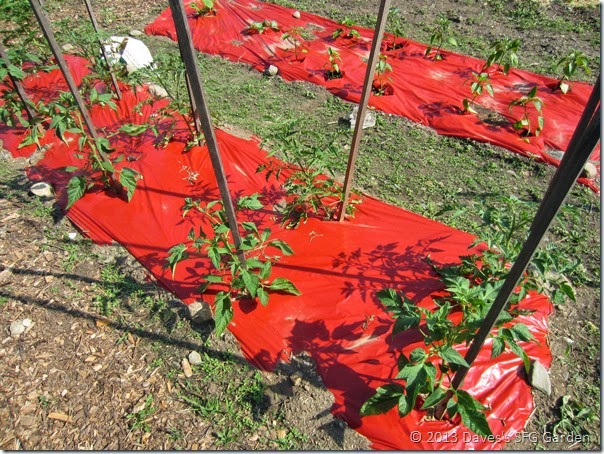
Some people didn’t return to the community garden this year, so some extra plots were available. I am splitting an additional plot with another gardener. Below is my half, planted to tomatoes and peppers, with a couple hills of summer squash. This allowed me to plant some heirloom tomatoes I wouldn’t have room for in the raised beds. Below are 4 Pineapple, 4 Brandywine, a Cherokee Purple, and another Sunkist.
 

tomatoes&peppers


So I am back and the garden is looking great. Today is July 4 and a traditional barbeque day. I have St. Louis-style ribs rubbed up and waiting for a chance to start a fire between the rain showers. A head of bok choy is going into an Asian-style slaw, which will get another large volume out of the refrigerator and make my wife happy. Probably no fireworks today because of the rain. Hope you have a great Fourth if you’re American, and otherwise have a great weekend.

Saturday, July 6, 2013

Tomato-Pepper Update–July 2013

So far it has been a mixed year in the garden, but not bad given the crazy weather. I had lots of germination problems, most with new seed stock seeded directly in the garden. One of 54 kohlrabi germinated, no mustard seeds despite planting them twice, 3 of 54 Jade bean seeds (and one was promptly eaten by something), half my Summer Dance cucumber, and all of the squash had spotty germination. One bright spot is the peppers and tomatoes, despite some disease problems. All of these were started indoors, of course.


A few weeks ago I was worried that I would lose all of my peppers to some disease that is still unidentified, but probably bacterial in origin according to the UMass extension. Whatever it was, copper spray fixed it and I have continued to spray weekly hoping to ward off the late blight that hit some of my tomatoes last year. I had to remove and destroy a lot of foliage but the peppers have bounced back nicely. Below I will show you how they are doing and I have a few questions for the varietal experts.


The picture below shows four Jimmy Nardello peppers in the lower left corner of the photo, with a row of Copra onions behind them and then a row of tomatoes trained up a trellis. Two of the Jimmy Nardellos are loaded with good sized peppers. and are still flowering. This is my first year with these peppers, so I assume I am going to let these turn red before harvesting them and doing that is not going to inhibit them from setting more fruit, right?


peppers


jimmy_nardello


Look at the pepper in the back corner of the group, the one closest to the onions. Its foliage is a darker green than the other JN peppers, and here is what the fruit kooks like:


mystery_pepper


Even I know that is not a JN, maybe a sweet red cherry, which is another variety I started from seed. Hopefully it is not a Padron, because if I wait for it to turn red I will have an unpleasant surprise. My Padron have not yet set fruit so I have nothing to compare to, but I think the Padron pepper is slenderer and more yellow-green.


Here is another surprise. I started four Black Cherry tomatoes, selected the best two for myself and gave the rest away at the garden seed swap. One of the plants is much larger and setting cherries like crazy. The other, more petite, plant has now set some fruit and this is what they look like (and yes, I took care of that sucker in the foreground). I think this is Gilbertie, a paste tomato that produces 8-10 inch long fruit, which I am trying for the first time this year. You can also see some flea beetle damage on the lower leaves, something I have never encountered before with tomatoes.


Gilbertie


I may have more surprises ahead. I labeled one of my four Padron peppers a mystery pepper because I wasn’t sure about its original location in the tray of soil blocks. I am now looking at one of my Lipstick peppers which seems to have foliage different from the other three. The problem goes back to my use of 3/4 inch soil blocks, made in rows of five blocks. Using that size block, I could pack a lot of blocks into a 1020 tray which was great because I only have a single heat mat. Labeling those tiny blocks is difficult, so I applied masking tape to the sides of the tray and wrote descriptions on the tape with a Sharpie. The trouble is the blocks, particularly the end blocks, tend to wander when the tray is handled, so I wound up with a few out of position. Next year I will have to try to be more careful. Hope the guy who got my Black Cherry tomato at the garden seed swap is enjoying my Black Cherry tomatoes.


One final item. My grafted tomatoes are healthy and doing fine, but they are dwarfed by their ungrafted control plants. Below is a photo of the grafted Juliet, which is about two feet tall and has set one truss of about five fruit. The next photo is the ungrafted Juliet, a monster plant that is suckering like crazy and has set multiple trusses of 8-9 fruit each. There is no comparison. Both are healthy right now so disease resistance is not a factor but may be later in the season. Right now I would have to say they were a waste of money.


grafted_juliet


ungrafted_Juliet


There is a lot of gardening season still to come but so far my peppers and tomatoes are doing very well and making me happy, even dare I say, optimistic.

Sunday, May 26, 2013

Bustin’ Their Britches

starts_under_lights


My tomato and pepper plants are still huddling inside under the grow lights where it is warm. They are getting leggy and it is past time they go into the beds, but it is still  too cold. We had the rain they forecast last week, off and on, but even if it wasn’t raining it was grey and ugly. And cold. Saturday daytime temperatures were in the mid-40s all day, and 42F overnight. In New Hampshire and Vermont it snowed last night, heavy in some places! Down South of us they have been having cold weather and even occasional frosts, giving them a little taste of New England gardening. Europe is experiencing similar unseasonably cold weather.


I have had the plants outside when I could, when it is sunny with reasonable temperatures and no threats of hail storms. I just can’t see exposing my pepper and eggplant starts to 40F daytime temperatures if I can avoid it. I’m trying to avoid any stunted growth from cold temperatures, since both types of plants are real heat lovers. The tomatoes can take a bit more cold weather, so I am hoping I can get them planted next week, maybe even Monday. Later in the week daytime temperatures are supposed to be in the low 80s so maybe we are seeing a break in this weather. It’s really dependent on the jet stream, which has moved very far south and is sucking in cold air from Canada.


The grafted tomato experiment is also shaping up. The grafted plants were potted up into plastic cups and have recovered from their trip to the east coast from California. Unfortunately, they are kind of spindly plants and are starting to get leggy. And I have to keep the graft above soil level to prevent the scion from rooting and negating the disease resistance of the rootstock, so burying them deep is not an option. I acquired a Juliet plant from a neighbor, Jem Mix, who grows organic seedlings and had her annual plant sale Saturday. It is a really stocky, well grown and robust plant (shown below on the right) and is going to be real competition for the grafted plant (on the left). Is the grafted plant up to the challenge, and can it justify its $8 price tag? The Juliet variety is already a robust grower and pretty disease resistant, so will the grafted rootstock add anything?


Juliet_contenders


With the acquisition of the Juliet yesterday, the tomato planting list for this year is now finalized and my precious 14 squares allocated to tomatoes are going to be planted with  the following varieties:

  • Sun Gold cherry (2)
  • Black Cherry (2)
  • Gilbertie paste (1)
  • Striped Roman paste (2)
  • Juliet (2, 1 grafted)
  • Big Beef (2, 1 grafted)
  • Cherokee Purple (1 grafted)
  • Pineapple (1)
  • Green Zebra (1)

Originally I planned on two Gilbertie plants but I had germination problems with it and only one of the plants is really acceptable. The other is a runt and I decided not to give it a coveted spot in the garden. After all, I’m not running a plant hospital here, I’m tying to grow some tomatoes. This is my first year for Gilbertie, but NE gardeners on the Square Foot Gardening forum like it a lot. Seed is hard to find, got mine from High Mowing Seeds. It takes a long growing season to ripen these, with fruits that get seven inches long and weigh 10-12 ounces, so hopefully we have a good tomato summer.

Template developed by Confluent Forms LLC